A Shuttle Launch. In 45 Minutes. In Glorious HD.
The shuttle program may be older than me… but it’s better than nothing. (And if you want to see something even cooler, click here.)
No, sir. Yes, sir. No, sir.

2001: The Book, The Movie, And Kubrick’s Unused Aliens.
So I just finished re-reading Arthur C. Clarke’s 2001: A Space Odyssey, one of my absolute favorite books. And before I inevitably sit down to re-watch Stanley Kurbick’s 2001: A Space Odyssey (my absolute favorite movie) I thought I’d share some thoughts on the masterpiece. Now, when I say “masterpiece” there may be some of you who wonder “whose masterpiece?” Both film and book are often designated their respective creator’s “masterpiece” so which came first? Was the movie an adaptation of the book? Or was the book an adaptation of the movie? The answer is neither.

A different Discovery One.
2001 was the creative collaboration of two artists, each a master of their craft. Sometime in the mid 1960s, Kubrick approached Clarke with the intent of making, what he joked, “the proverbial good science fiction movie”. Clarke suggested adapting a few of his short stories, most notably “The Sentinel.” Together, over the course of a few years, Kubrick and Clarke created the framework of their novel/film (sadly, I’ve never read – or been able to find – The Lost Worlds of 2001, a companion book, written by Clarke a few years after the film’s release, chronicling the collaboration.) Pleased with the result, each went off and did what they did best: Clarke wrote one of the greatest sci-fi novels of all time. And Kubrick make one of the greatest sci-fi films of all time (if not the greatest.)
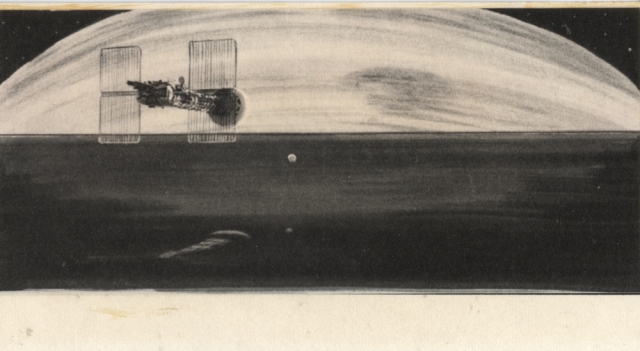
Encounter with TMA-2.
Any fan of the movie, or fan of the book for that matter, will immediately note a handful of differences between the two. Many of the changes came about due, as they often are, to budgetary reasons; others due to Kubrick’s desire to make the film more cerebral. Probably the most notable difference is that, in the novel, Discovery One’s mission is to Saturn, not Jupiter, as it is in the film. Other differences found in the novel include a slightly different looking monolith, an explanation for Hal’s neurosis, and a much more descriptive, and comprehensible, Stargate sequence.
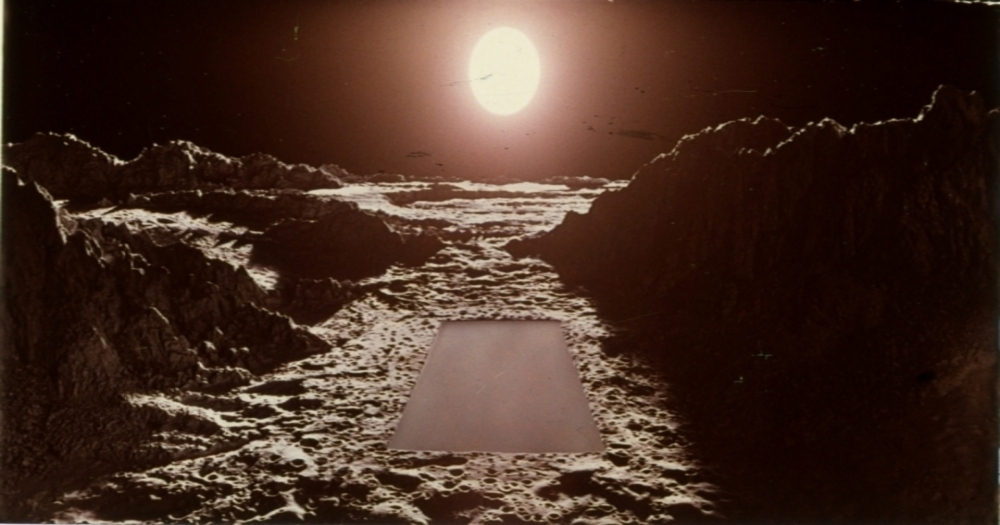
The Stargate? On Japetus? Or the Monolith? On the Moon?
Oh… and least I forget, a dramatically different homicide attempt by Hal (hey, look at me not ruining it for you!)

A sailor's funeral. In space.
As for the Stargate sequence, I find it amazing that both the film and the novel’s sequences differ so greatly yet both are my favorite moments of each. The film’s sequence is one of the trippiest, mind-blowing, thought provoking scenes ever shot… as well as inventive. Without question, my favorite scene from any movie I’ve ever seen. The book’s sequence, though much more descriptive and far less mysterious, is equally trippy, mind-blowing, and thought provoking… as well as imaginative. Undoubtedly, my favorite chapter from any book I’ve ever read.
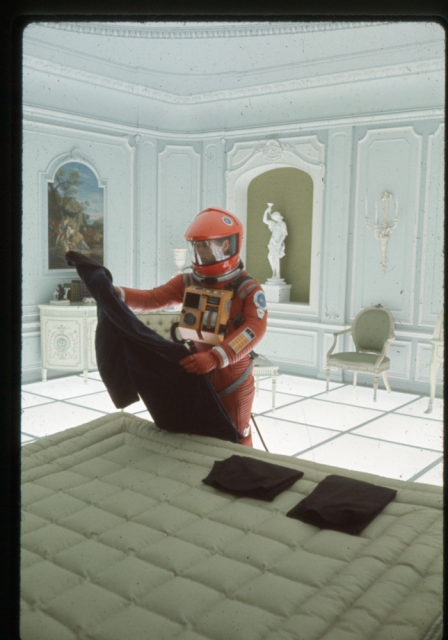
Getting comfortable. In a deleted scene.
It’s interesting that early drafts of the script, as well as early storyboards and effects tests, are much more similar to the novel. It’s kind of fitting the film evolved so far from the other considering a central theme between the two is man’s evolutionary destiny. And what’s really crazy…
Kubrick even considered including the actual aliens grooming Bowman in his film:

Kubrick's aliens.
Note: all of the images in this post come from Douglas Trumbull’s website. Trumbull was Special Photographic Effects Supervisor on 2001: A Space Odyssey and, much like Kubrick, was/is a master of his craft. Some of the greatest special effects of the 70’s, 80’s, and ‘90s came from this man (including Back to the Future The Ride!) His website itself is a spectacular resource; I highly recommend you check it out and appreciate his work. You can find a lot more 2001 concept art, storyboards, and model work here!
hello, i love you

It’s not about YOU, it’s about THEM (whoever or whatever they are.)
To many, the thought of space exploration is a joke. It is an out-dated and unrealistic dream that offers no rewards other than to inspire school children to study hard in science class. To many, it is a wasteful and altogether pointless endeavor. To them, tax dollars should be spent at home, not thrown away into space. And I understand exactly where these viewpoints come from and it’s hard to argue against them. Never-the-less, to see our once mighty space program dwindle down to a shell of it’s former self; to see the program’s budget cut again and again and again, I can’t help but be upset. Mankind was meant for greater things… right?
It’s moments like this, when I’m truly upset and utterly frustrated with mankind’s absolute reluctance to reach for the stars, that I find refuge in the optimistic and inspiring words of the late, great Carl Sagan. And, on most occasions, the work I turn to is Sagan’s Pale Blue Dot. Written as a follow up to his critically acclaimed novel and television series Cosmos, Pale Blue Dot picks up right where its predecessor left off: with Mankind’s first few steps into space. And it’s the last chapter in particular, “Tiptoeing Through the Milky Way,” that I often flip to and read. It’s in this chapter that Sagan, always reluctant to speculate too far into the future for fear of being ridiculed, does just that. And it’s within those pages that I find comfort and reassurance. It’s in those pages that I’m reminded of something so simple and basic that I feel silly for ever being upset in the first place: It’s not about me, it’s about them (whoever or whatever they are.)
To paraphrase Dr. Sagan, it’s naive and foolish to think mankind would be capable of leaping off its home world in a single bound. It takes trial and error… and time, most likely centuries. And, in the present day, it’s only natural for there to be doubters and pessimists. But to those who think the idea of space travel is a pointless and wasteful endeavor, Sagan offers this thought: billions of years ago, the majority of fish in the sea probably thought the idea of crawling out of the safety and comfort of their dark and murky waters and on to dry land was also foolish and wasteful. And yet, billions of years later, here we are. Millions years ago, Sagan also points out, the majority of monkeys probably thought it was a pointless and wasteful endeavor to leave the safety and protection of their tall trees and walk upright on solid ground. And yet, millions of years later, here we are.
Sagan’s solace to me, and other hopeful optimists, is this: evolutionary advances don’t happen in an individual lifetime. They take place on unimaginable timescales spanning thousands of generations. And that’s exactly what space exploration is: an evolutionary advance. So for all of us that stress and worry over the NASA budget in 2010, in a million years, something (and if history and evolution has taught us anything, it probably won’t be “human” by our definition) will look back at these past few centuries, and the handful of centuries to come, as fondly and matter-of-factly as we look back at the first fish to crawl on to dry land and the first monkey to climb down out of the trees. And, undoubtedly, they will be just as thankful as we are of our ancestors for taking their risks and facing those dangers. We wouldn’t be here without them.
So, my point is this: don’t be upset that Obama has cut the space program down to a joke… because this isn’t about him. And don’t be upset that your grandchild probably won’t be born on Mars… because it’s not about her. It’s about them, whoever and whatever they are, a thousand, a million, a billion years from now.
Note: You can read Pale Blue Dot online here, along with many of Sagan’s other books, courtesy Google Books (something Sagan would undoubtedly approve of.) And you can read my favorite chapter here!
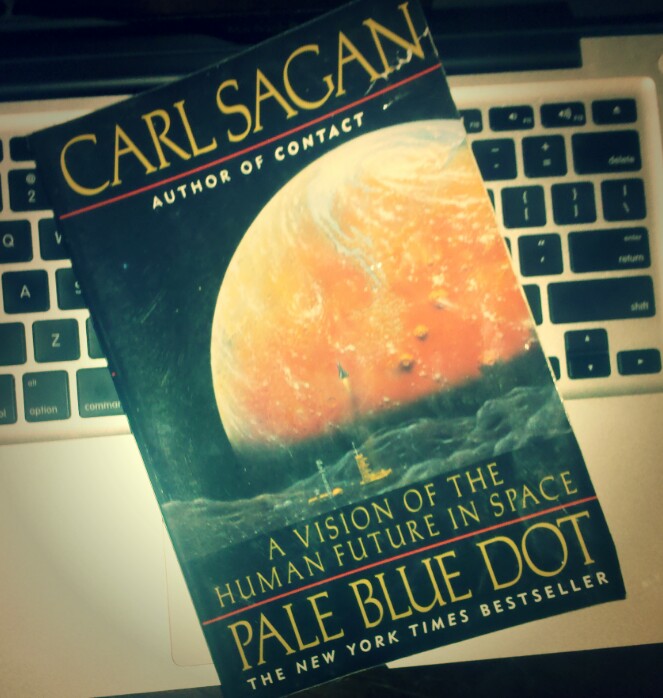
Pale Blue Dot: An old favorite.
My car in white.
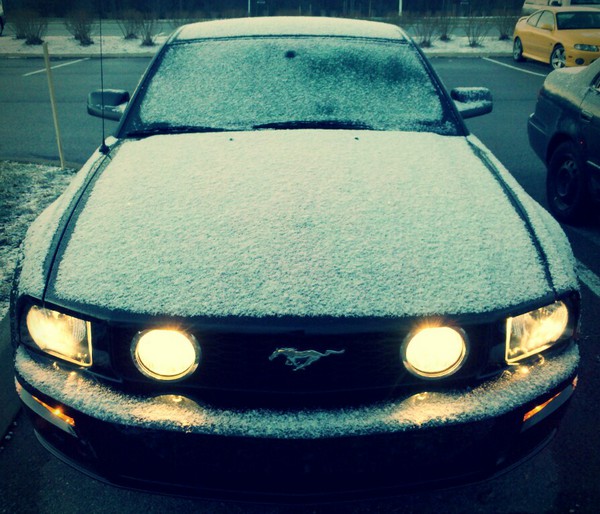
My car in white.
One Job at a Time.

Those hot shots.
A Frozen Brake Line is an Unhappy Brake Line.
Thanks Ford — What a great way to start off the week! Next time issue a f*cking recall you stingy bastards!
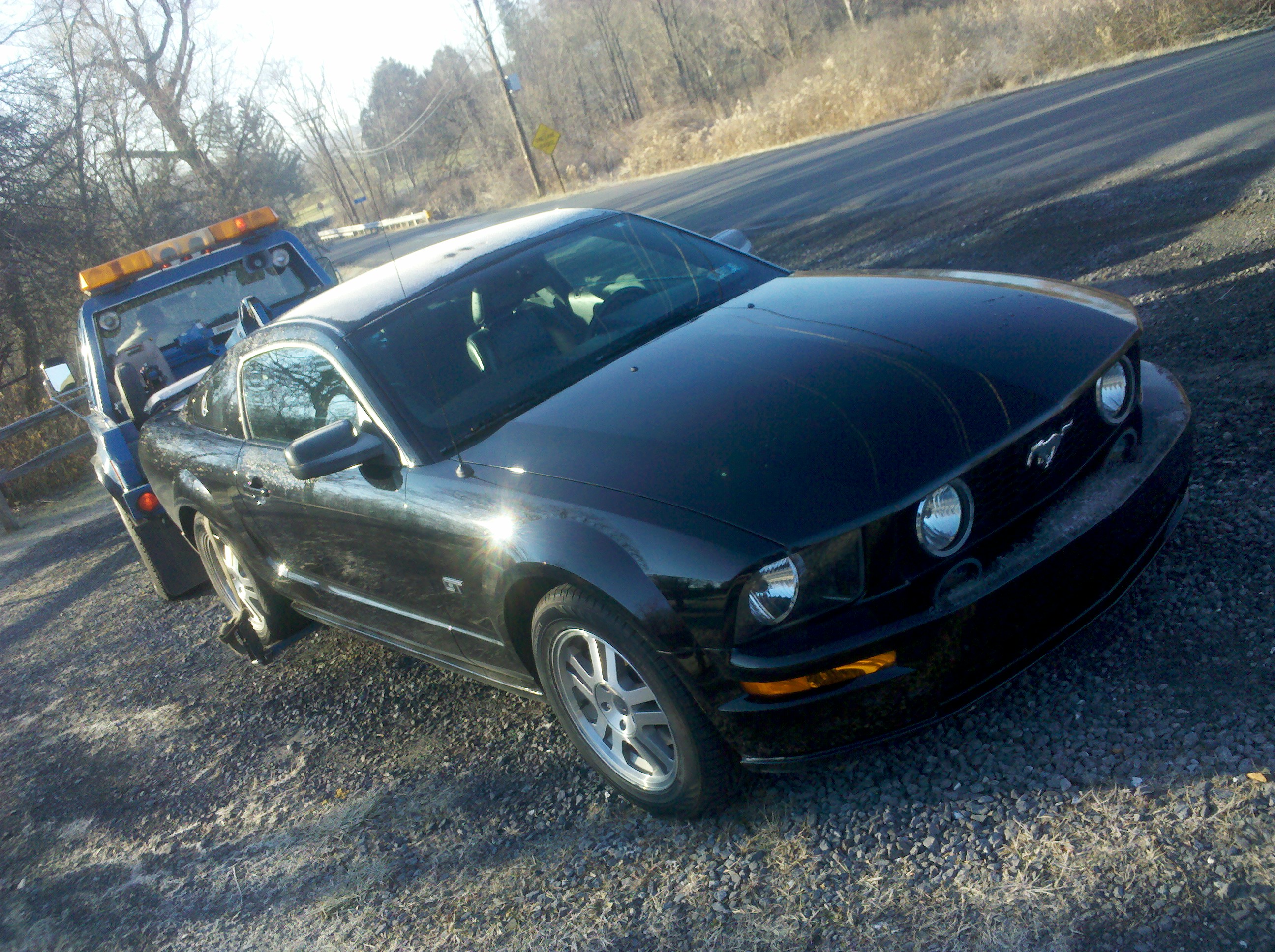
Parking brake freeze? You betcha.
Concept Art & Storyboards: Things I’m Thankful For.
My addiction to concept art and storyboards started at an early age, a very early age. Whether it was concept art, storyboards, or character sketches, I couldn’t get enough of it. They were sneak peaks into the creative processes of my favorite filmmakers. They were glimpses (sometimes good, sometimes bad) at what “could have been.” They made me appreciate what worked. And, perhaps more importantly, taught me what didn’t. Like I said, I couldn’t get enough of it. I loved it. But back then, with no internet or dvd extras, the goods were hard to come by. Pretty much all I had were movie companion books and, being a kid, most of them were Christmas presents. I recently went home to my parent’s (Thanksgiving!) and I dug up a few of these books, my favorites. Amazingly, I find them just as fascinating now as I did so long ago…
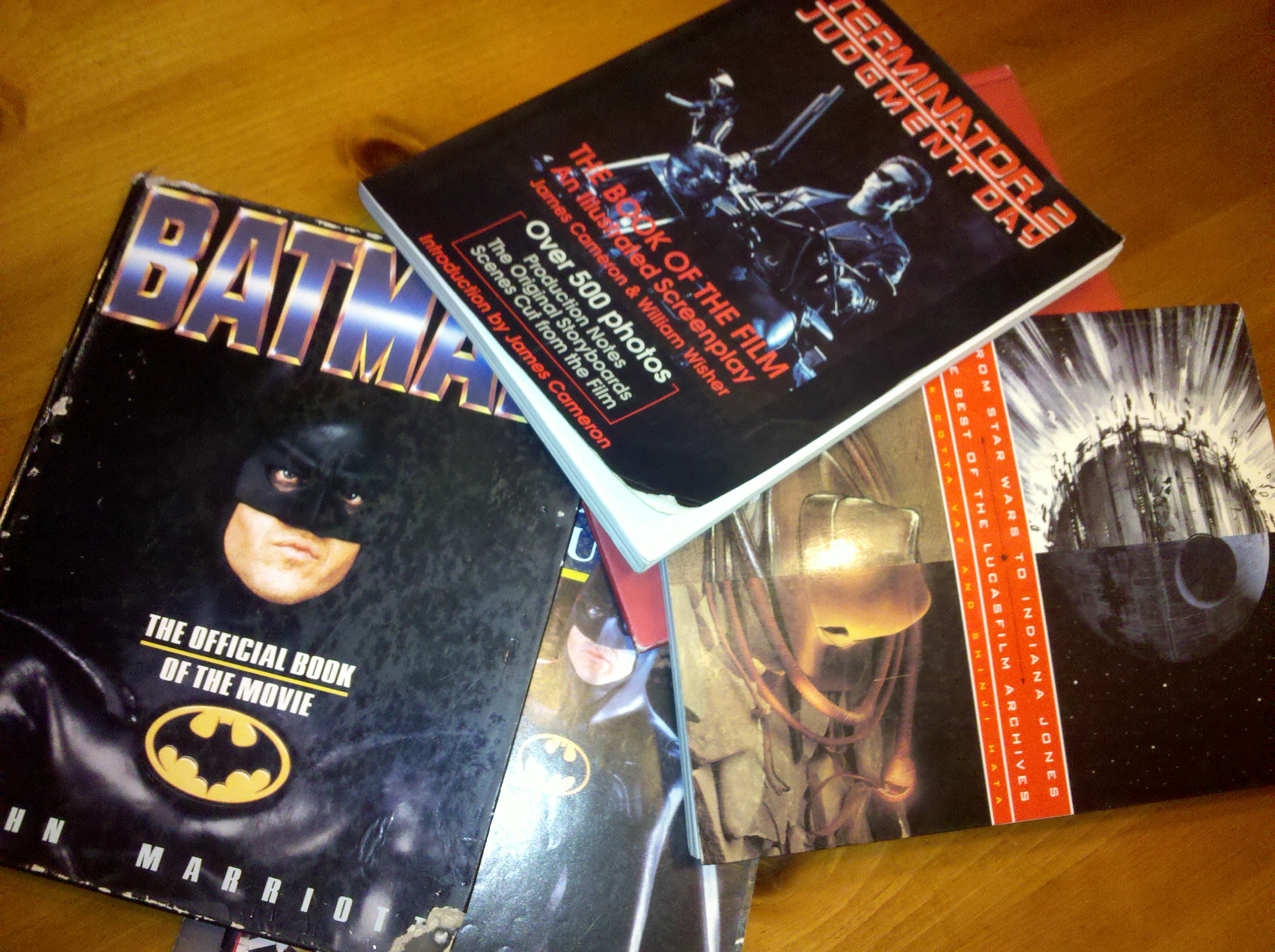
The Goods
First up: Batman: The Official Book of the Movie, by John Marriot

Batman in blue? And look at that helmet cowl. Interesting.
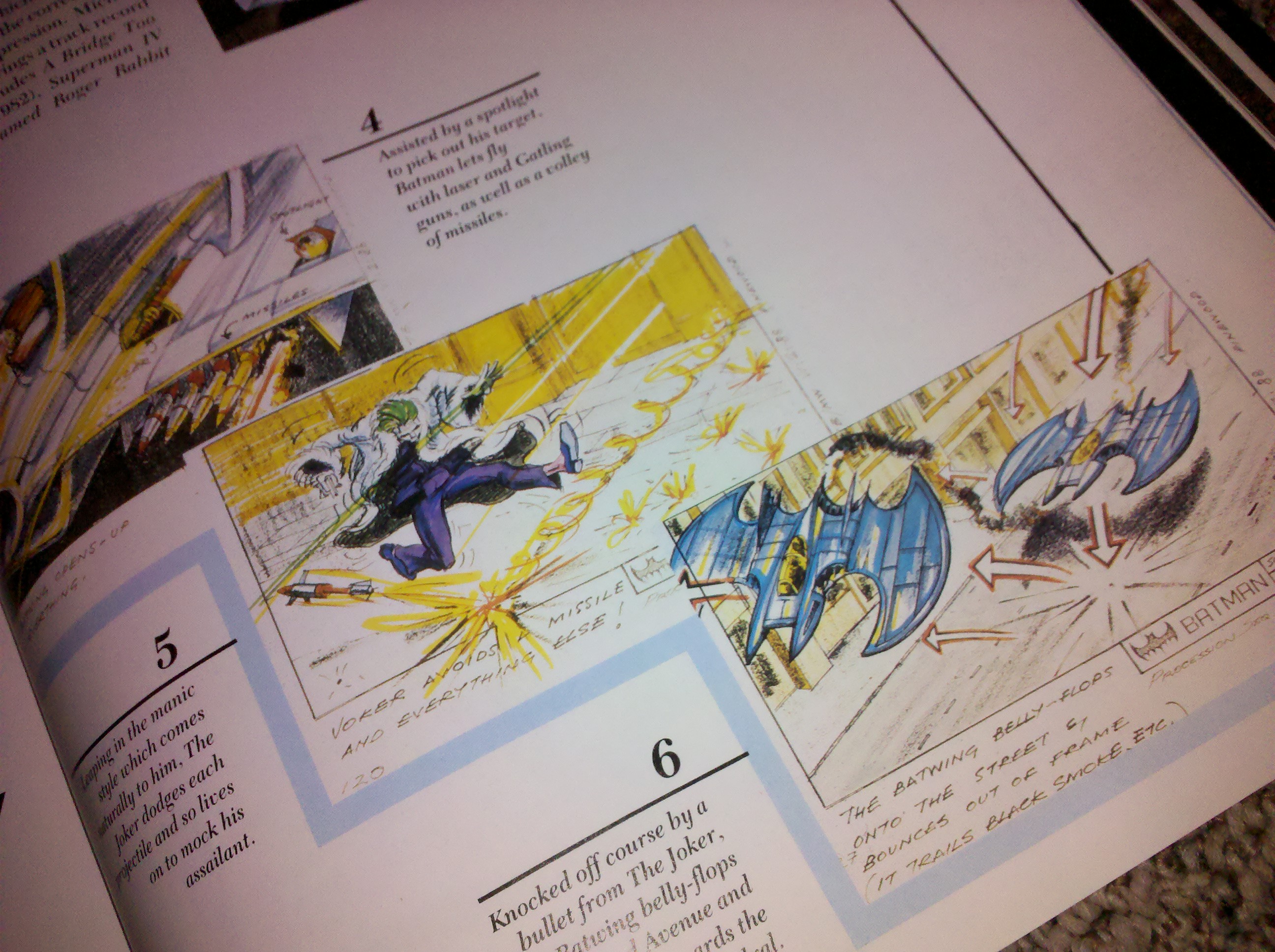
A Batwing Belly-Flop
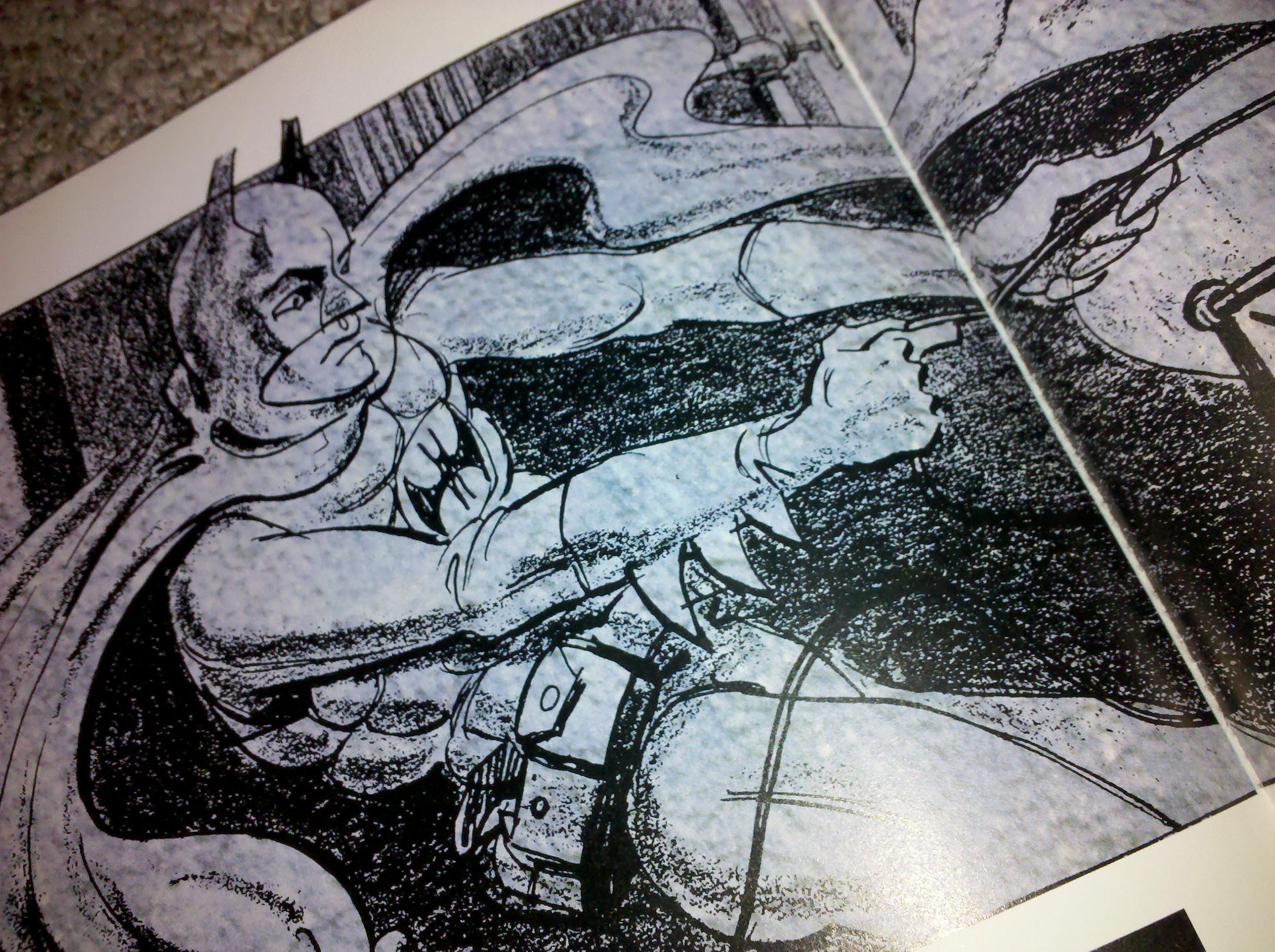
A More Traditional Looking Batman Costume
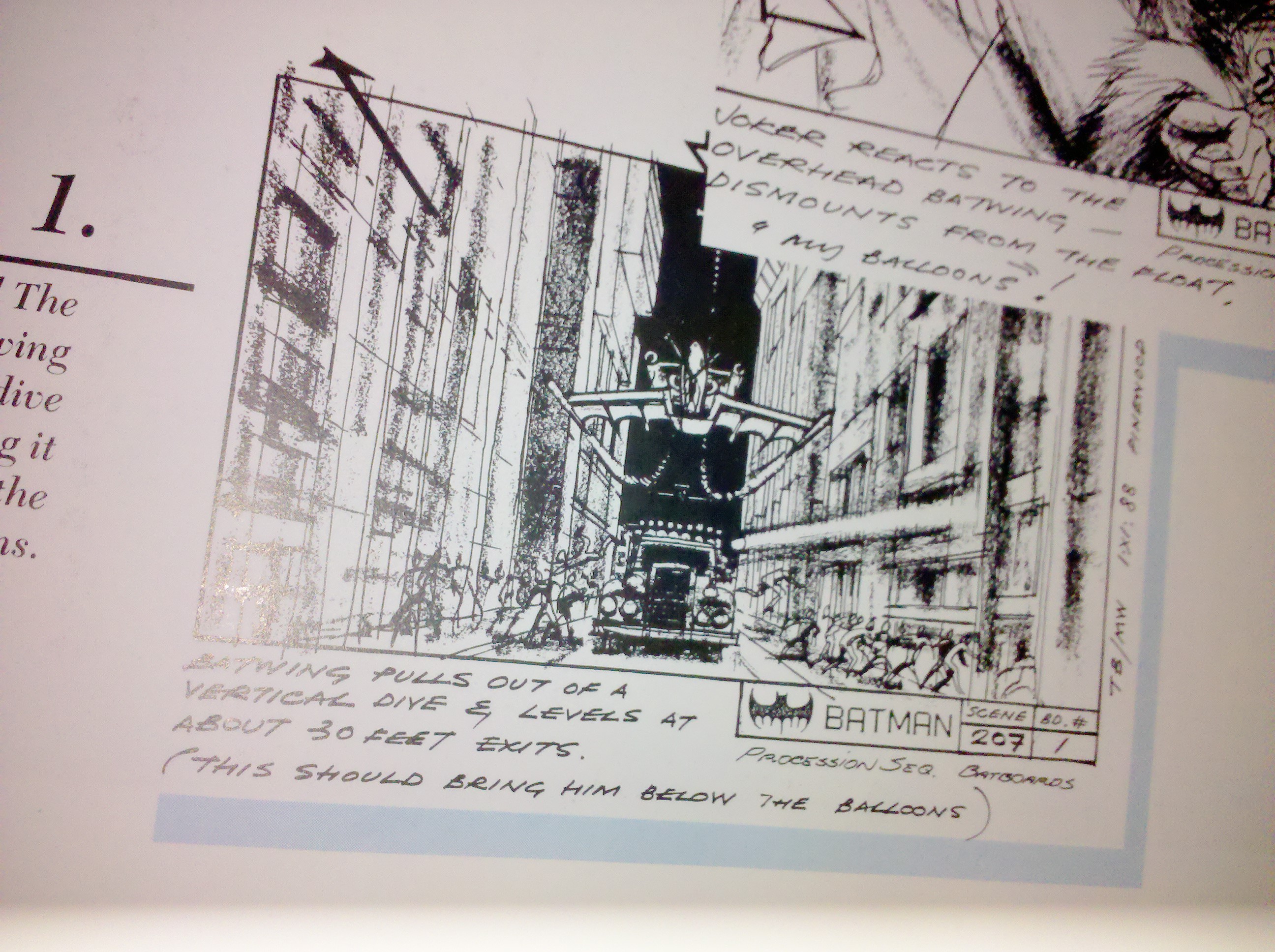
Not quite the Batwing we got on film.
Next up: Terminator 2 Judgement Day: The Book of the Film (note: these are storyboards from unfilmed scenes!)
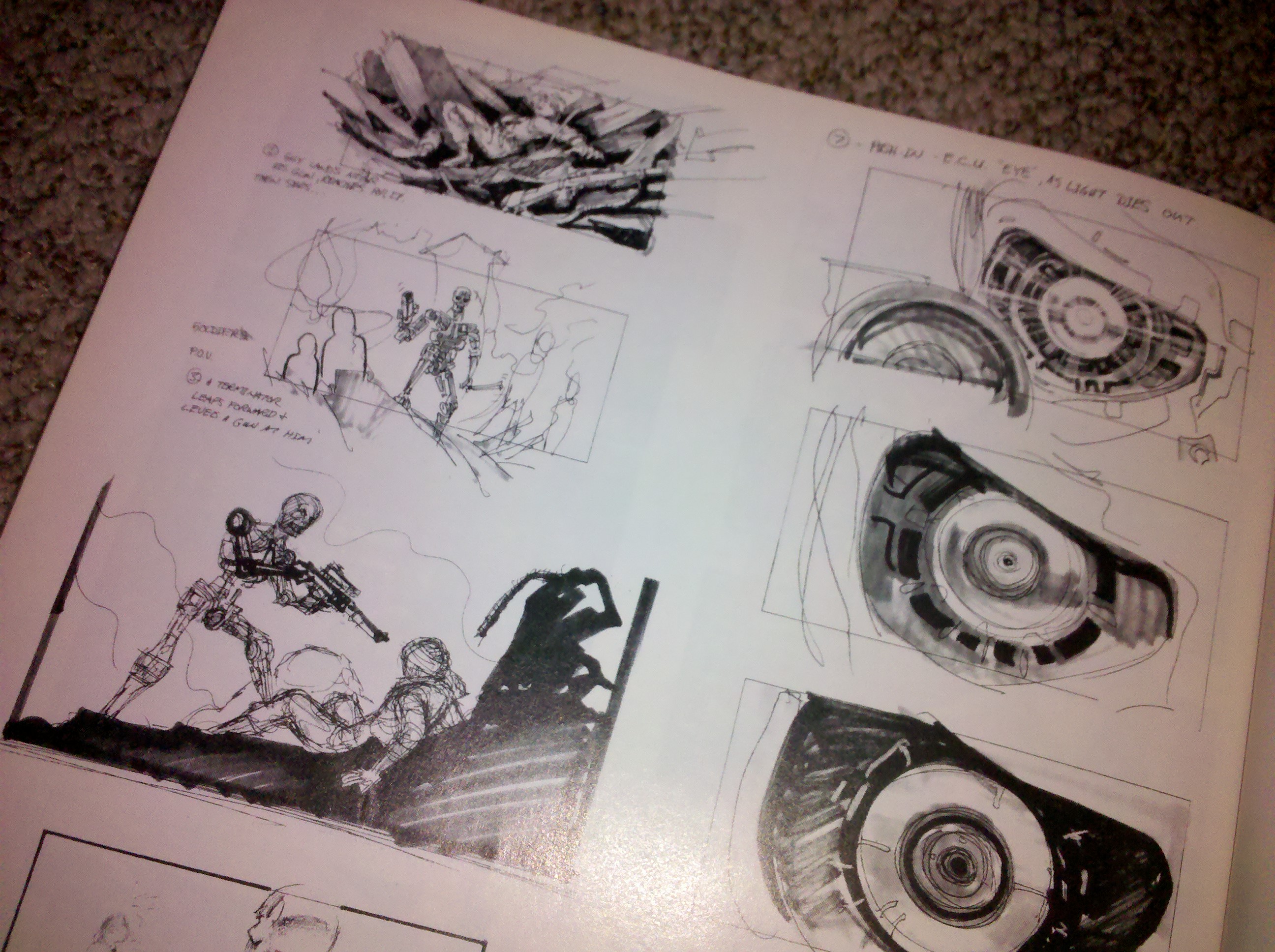
Skynet Defeated
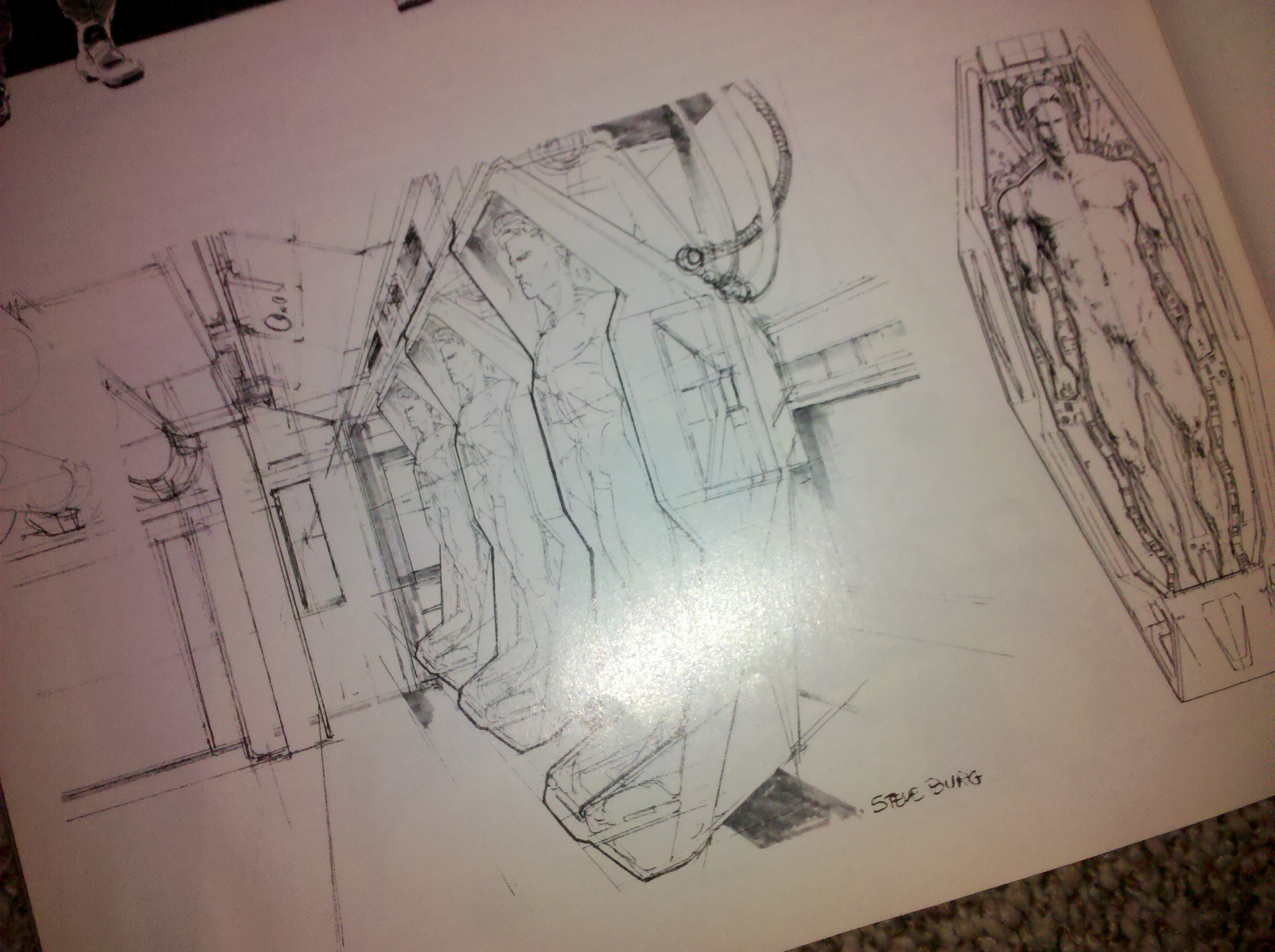
800 Series Assembly Line
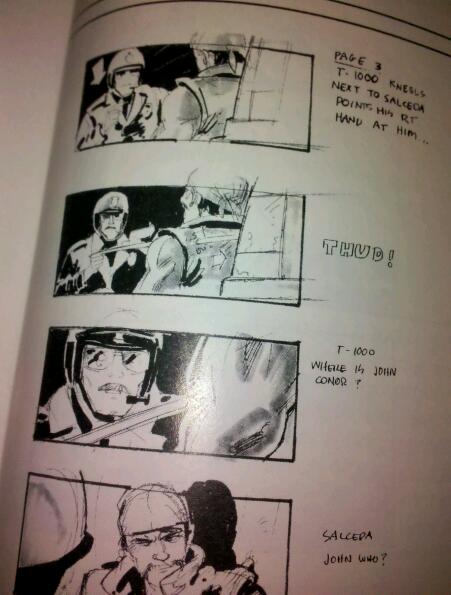
Enrique's Death... check out that T-1000 stache!
And finally: From Star Wars to Indiana Jones: The Best of the Lucasfilm Archives
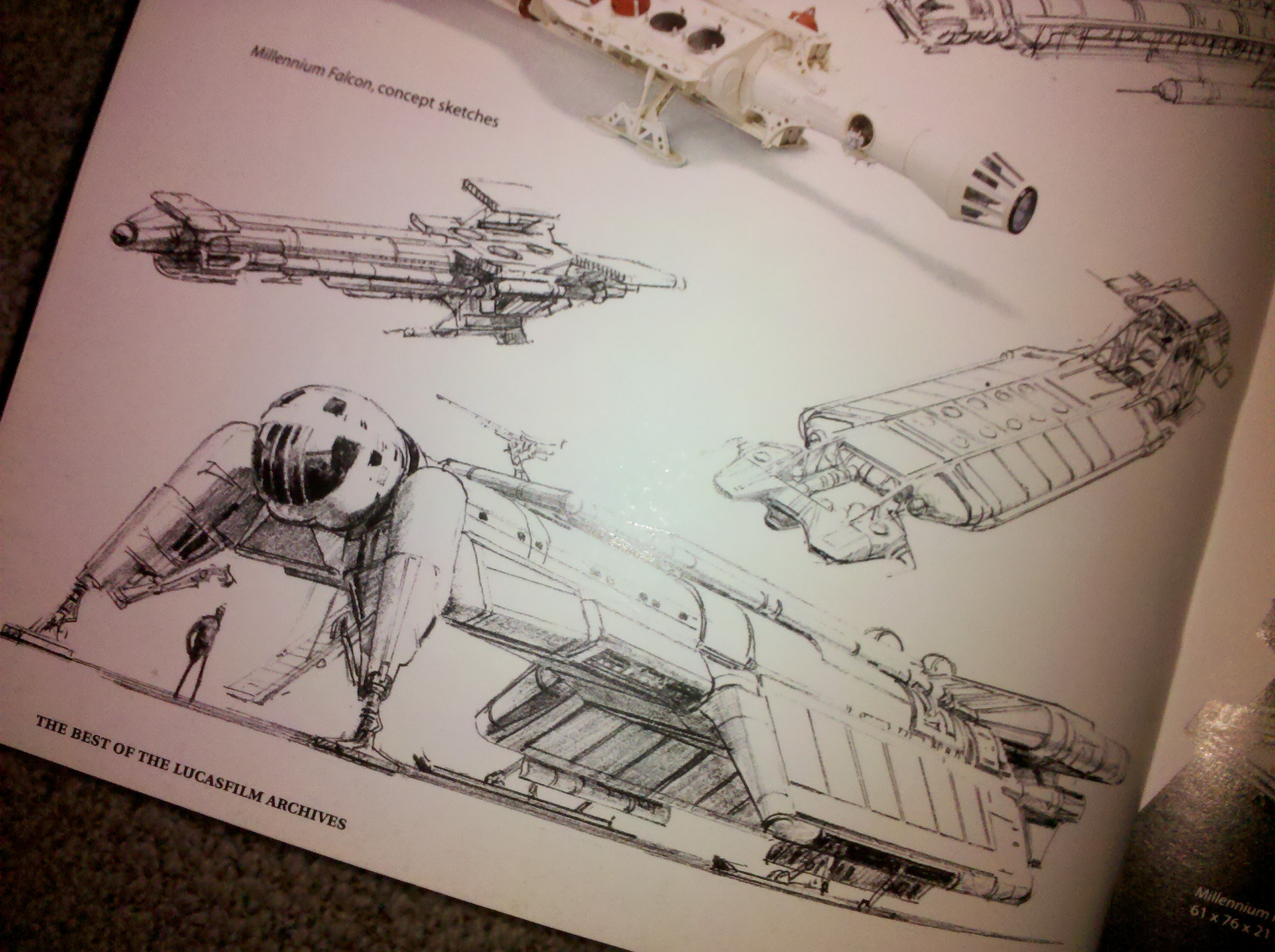
Millennium Falcon Design Sketches... way off the mark.
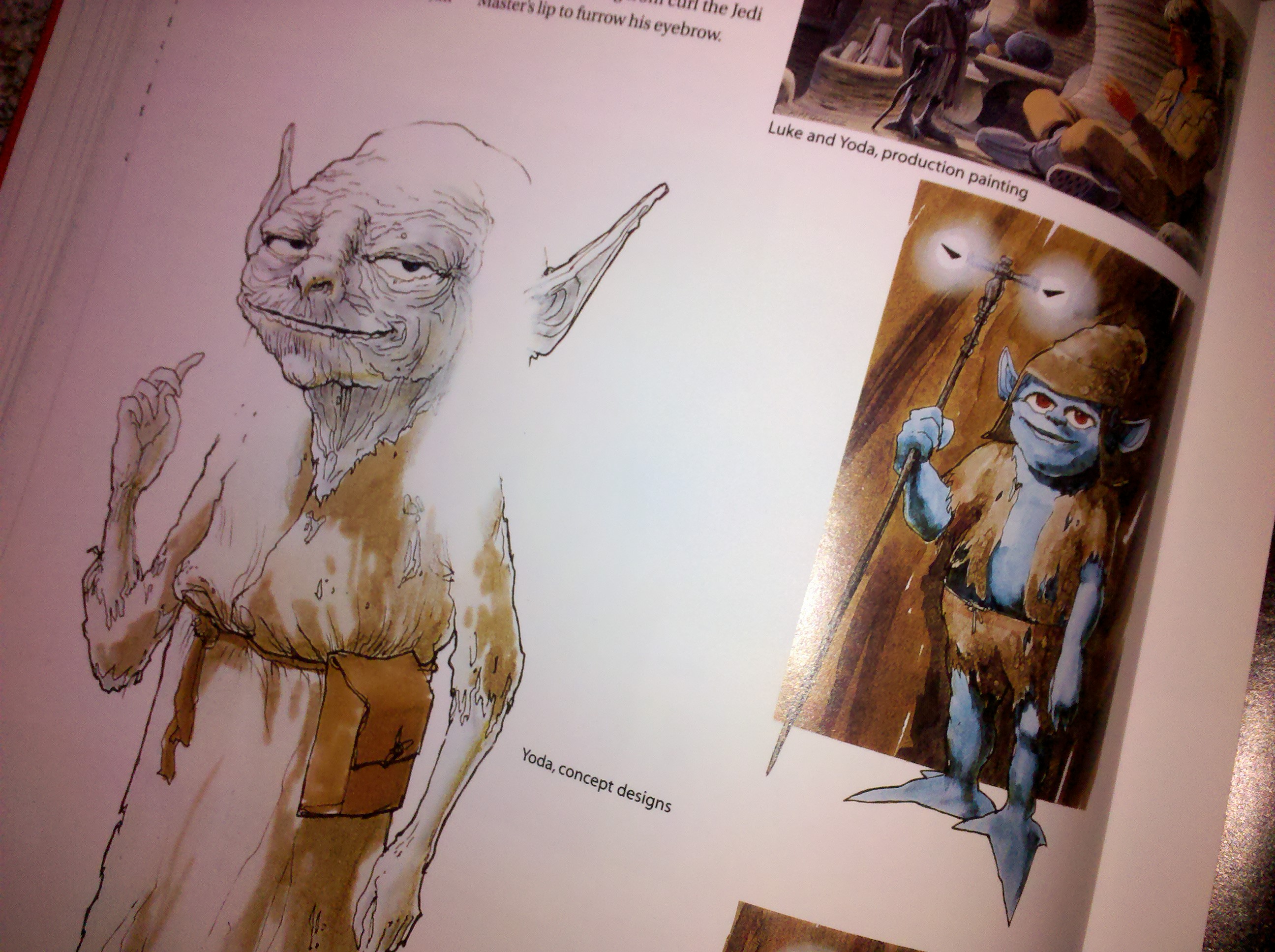
Yoda Character Sketches... way way way off the mark!

Raiders of the Lost Ark, Nazi with Mechanical Arm... cool.
 Klockwork Kugler: This is my blog. This is what I do.